


The design FMEA is used to identify potential errors early in the development and design phase of a product or service, to evaluate them, and to derive measures for risk minimization. The goal is to identify weaknesses in the design before the product or service goes to market.
You can download the data here: Design-FMEA.atb
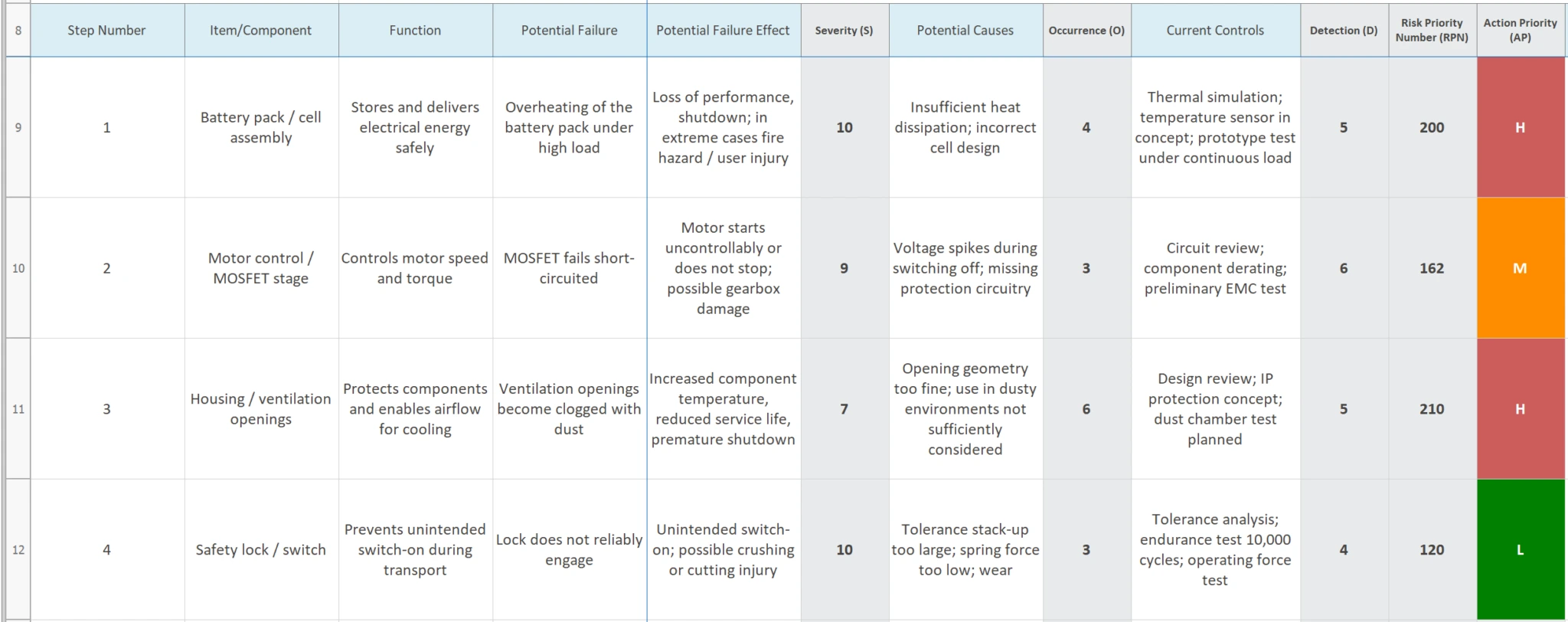
In this excerpt, a Design FMEA was conducted for a cordless screwdriver. The image shown below depicts the area of the FMEA that was defined in advance, i.e., the status at the time of recording.
Interpretation of the Results
Based on the task priority number, it is evident that two measures were rated with H. These measures should be prioritized, meaning they should be implemented as quickly as possible to reduce the risk.
The RPZ number results from the multiplication of Significance × Occurrence × Detection.
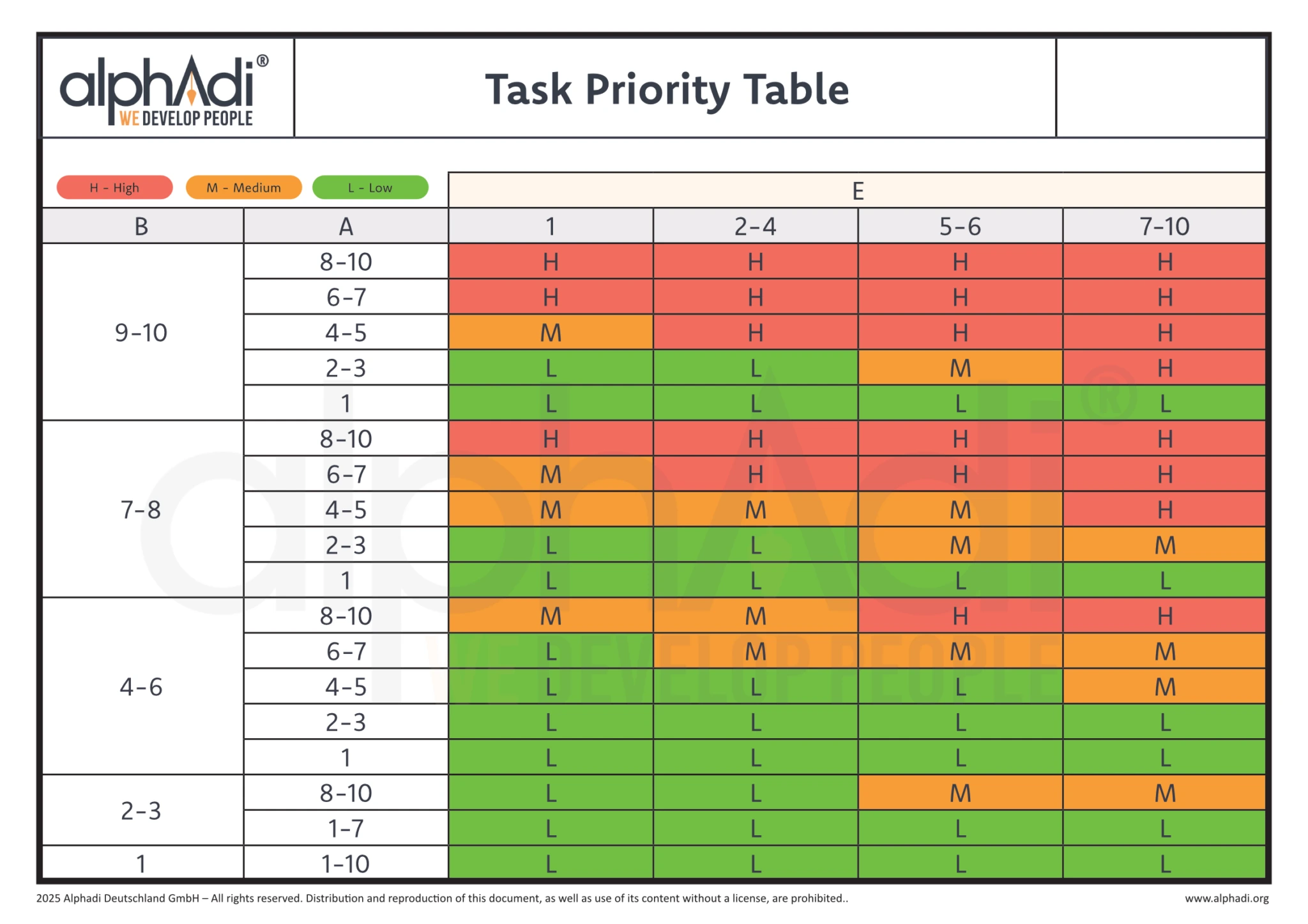
Nowadays, the AP is increasingly used. The AP stands for task priority and places greater emphasis on the significance of the error consequence. You can see the AP table in the image shown below.
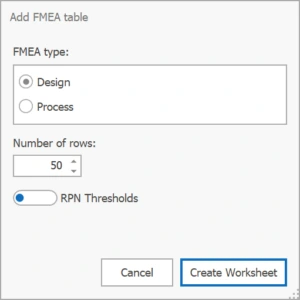
In the Improve phase, select the Design FMEA and the number of rows you want to evaluate, then click Create Worksheet.
Preliminary Work
- Altitude analysis: Sometimes a Design FMEA that considers a complete product is too comprehensive. In this case, the scope must be reduced to a component.
- Clearly classify the components and functions.
RPZ (Risk Priority Number): Product from evaluation criteria for risk assessment
Occurrence: Probability that a design error occurs
Significance: Impact of the error on function or customer
Detectability: Probability of detecting the error before delivery