

Stone arch bridge over a fjord at sunrise
 
Aligned with the Shingo Model

Culture Development System

From a single culture project to a continuous development process. A structured framework that makes corporate culture visible through observable behavior — and lets you prioritize and shape it deliberately.

The journey begins  
The problem

Many initiatives — but no common framework?

Companies invest in leadership, standards and change initiatives. Yet in day-to-day work, behavior often looks different from what was intended:

Standards are bypassed
Improvements lose their impact
Established routines are not lived

That is why the Culture Development System was developed — from a single culture project to a continuous development process.

The cycle

From observable behavior to targeted change.

A structured framework for the continuous development of corporate culture — aligned with the Shingo Model and inspired by agile ways of working. The starting point is the behavior that can actually be observed.

01 · OBSERVE

Observe

Make cultural potential visible through behavior.

02 · PRIORITIZE

Prioritize

Select relevant topics and manage them in the backlog.

03 · SYSTEMS

Improve systems

Question and develop processes, routines & management systems.

04 · IMPLEMENT

Implement

Realize changes in manageable cycles.

05 · REVIEW

Review

Observe at the Gemba whether the desired behavior is developing.

06 · LEARN

Learn

Use the insights and start the next cycle.

Five characteristics

What makes the approach special?

Culture development becomes a management process.

Behavior instead of abstract notions of culture

Culture becomes concrete and observable.

Systems instead of symptoms

Not only behavior is questioned, but also the conditions that influence it.

Prioritization instead of actionism

The most relevant potentials determine the focus.

Short learning cycles instead of large projects

Complex topics are broken down into verifiable development steps.

Impact instead of implementation

Not “Has the measure been completed?”, but: Has the desired behavior actually developed?

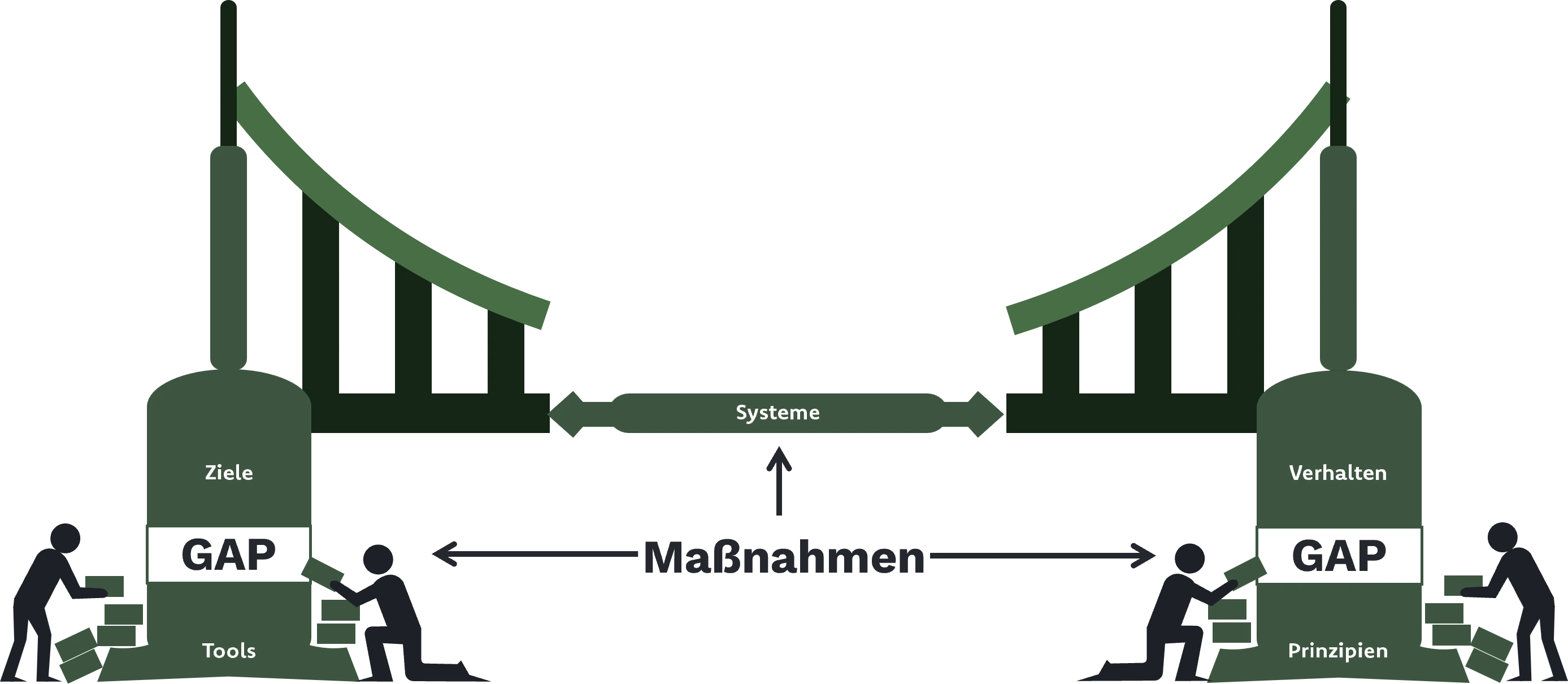
Mental model

Think in systems.

Lean improves systems — and every system changes results and behavior at the same time. Transformations succeed when both sides are taken into account: structures and people.

Bridge diagram: goals and tools on the left, behavior and principles on the right, connected by systems and measures that close the gaps on both sides
Target group

Who is the seminar for?

The program is aimed at leaders as well as Lean and OPEX professionals, Black Belts and Master Black Belts. Participants should already have leadership experience — and a genuine interest in cultural and organizational change.

Leaders Lean & OPEX professionals Black & Master Black Belts
World Class 1 0 2 3 4 5 6 0 1 2 3 4 5 6 [Years] Organizational Excellence Eort l s T o o l s L e a d e r s h i p S t r a t e g y S y s t e m s CULTURE TRANSFORMATION Behaviors Potential
Practical example

Shopfloor meeting: from presentation to dialogue.

1

Observation

KPIs are presented — the team barely participates.

2

Desired behavior

Employees ask questions, discuss deviations and look for causes together.

3

Influencing systems

Moderator qualification · meeting structure · work instruction · leadership routines · shopfloor management system.

4

Possible change

Moderator workshop · learning videos · specific discussion questions in the work instruction.

5

Review at the Gemba

How many people participate? Are questions being asked? Are causes discussed together?

6

Next cycle

The measure has been implemented — but has it actually changed anything? The insights flow back into the cycle.

Curriculum

An excerpt of the content.

Creating CDM awareness
Identifying cultural levers
CDM architecture
Designing culture
Agile pilot projects
Behavior as the core factor
The Shingo Model
Analyzing systems
Shaping behavior
Assessing culture
Leadership as a culture driver
Tools in the CDM
Solving problems systemically
Feedback systems
Designing rituals
Change communication
Cultural storytelling
Dealing with resistance
Culture Impact Plans
… and more
Learning objectives

Understand the framework. Adapt it specifically to your organization.

After the 2-day workshop, you will be able to:

Describe cultural potential through observable behavior
Define desired behavior in concrete terms
Structure and prioritize potentials
Identify influencing work and management systems
Develop targeted improvements
Turn big topics into short learning cycles
Create Gemba cards to check effectiveness
Transfer roles and responsibilities to your organization
Materials

Ready to use.

For practical application, you will receive:

Culture Development Guide

A guide to the entire system.

System poster

Process, roles and interrelations at a glance.

Role profiles

Tasks and responsibilities.

Gemba cards

Templates for reviewing behavior.

Kanban board

Excel template for backlog, prioritization and steering.

Templates & practical examples

For direct transfer into your organization.

FAQ

Frequently asked questions.

General questions

The Culture Development System (CDS) is a framework for the systematic and sustainable development of corporate culture. It centres on recurring learning and improvement cycles: observe, prioritise, improve systems, implement, review and learn.

Culture development is often treated as a time-limited project rather than as an ongoing task for the whole organisation. If leaders, employees and existing management systems are not sufficiently involved, changes often remain superficial. Sustainable culture development therefore requires clear responsibilities, routines that are actually lived and the continuous improvement of existing systems.

The CDS is based on the Shingo Model and combines it with approaches from agile working. At its core is the insight that systems influence people's behaviour and that this behaviour shapes the corporate culture. Alphadi Deutschland is a licensed Shingo Affiliate.

Observable behaviour makes abstract corporate values and principles concrete and verifiable in everyday work. From the value “openness”, for example, the desired behaviour can be derived that leaders consciously take time to listen to their employees' improvement ideas.

Gemba cards help to observe specific behaviours and processes directly where the work happens. Each card focuses on a specific question, for example: “How is our shopfloor meeting conducted?” This makes it possible to spot deviations and identify potential for improvement.

About the training

The training is aimed at leaders, team leads and those responsible for Lean Management, Operational Excellence and organisational development who want to actively shape corporate culture. No prior knowledge of the Shingo Model is required.

You will be able to identify cultural improvement potential based on observable behaviours, define desired behaviour and analyse relevant work and management systems. You will learn to prioritise improvements, implement them in short learning cycles and check their effectiveness using Gemba cards. You will also be able to derive roles and responsibilities for culture development in your organisation.

Registration and organisation

The participation fee is €2,380.00 gross per person.

Registration takes place on this page

If you have any questions, we will be happy to help you personally.

Yes, you can of course register several people from your company for the training.

There are various accommodation options in and around Kassel. We will gladly help you find suitable accommodation.

Secure your place.

Register in good time for a free online information session — or arrange an appointment with us directly.

€2,380 incl. VAT 2 days on site in Kassel +49 561 94 91 89 0 info@alphadi.org
Cart
What is the Culture Development System? German What is the Culture Development System? English What is the Culture Development System? Spanish What is the Culture Development System? Italian What is the Culture Development System? French What is the Culture Development System? Polish What is the Culture Development System? Portuguese